
Myth vs. Fact: The Operational Realities Shaping Sterile Processing Performance

Sterile processing is most often evaluated through the lenses of compliance and safety. Less visible, but equally consequential, is how sterile processing performance drives operational variability across surgical services.
Misconceptions about where costs, risks, and disruptions originate can prevent leaders from addressing the true sources of instability. Separating myth from reality helps clarify where governance, discipline, and visibility matter most.

What Impacts the Cost of Sterile Processing?
Labor overtime, rework from tray defects, rush cycles, and premature instrument replacement are operational symptoms of inconsistent workflows and limited visibility. These costs fluctuate day to day and compound across surgical volume.
Operational context: Operating room time is estimated to cost approximately $36–$37 per minute, depending on case complexity and hospital setting. Even brief delays magnify financial exposure across a full surgical schedule.
How Does Overtime Mask Inefficiency?
While overtime may address short-term gaps, it introduces fatigue-related errors, rework, and additional labor expense. Over time, this pattern erodes predictability and increases variability rather than delivering sustained performance stability.
Analyses of surgical operations and operating room efficiency show that recurring delays and staffing variability can translate into millions of dollars per operating room annually through lost utilization and extended labor hours.
How Do Tray Errors Impact Operations and Finances?
A single missing or incorrect instrument can trigger reprocessing, delay incision, compress downstream cases, and extend labor hours. While the defect may appear minor, its effect multiplies across daily case volume and across teams.
External safety analyses, including ECRI’s Top 10 Health Technology Hazards for 2026, have shown that reprocessing failures are frequently driven by incomplete or impractical device cleaning instructions—turning what appear to be isolated tray defects into repeat, system-level risks rather than one-time errors.
Peer operational analyses have documented six-figure annual losses at individual hospitals driven by sterile processing rework, overtime, and associated operating room disruption.

How Does Lifecycle Misalignment Drive Increased Costs?
Inconsistent inspection, improper handling, and lack of standardized maintenance accelerate damage and capital spend. When lifecycle governance is not fully aligned, instruments may be retired either earlier or later than intended, increasing reliance on emergency replacement. These challenges are further compounded by instruments occasionally becoming caught within surgical drapes during procedural workflows.
Hospitals that improve inspection discipline and lifecycle oversight have reported hundreds of thousands of dollars in annual repair and replacement cost reduction.
How Does Cost Predictability Help Improve Patient Safety?
The same disciplines that reduce cost variability—standard workflows, documentation accuracy, competency validation, and performance monitoring—also strengthen compliance and reliability. Fewer rush cycles and less rework support safer, more consistent surgical readiness.
National safety analyses continue to identify inadequate reprocessing guidance and inconsistent sterilization practices as preventable hazards that expose patients, staff, and organizations to harm—reinforcing that operational discipline is a safety requirement, not a cost tradeoff.
High-performing programs demonstrate that disciplined operations protect both safety and financial stability.

Why doesn’t case completion equal sterile processing reliability?
Sterile processing programs can appear functional while absorbing significant hidden strain through overtime, rework, rushed cycles, and informal workarounds. These behaviors allow schedules to hold temporarily but create fragility beneath the surface.
When performance depends on heroic effort rather than disciplined processes, risk increases—especially during census swings, staffing disruption, or survey activity. True performance is defined by consistency, not by simply getting through the day.
Operational context: High-performing programs evaluate tray accuracy trends, reprocessing frequency, labor variability, and escalation patterns—not just case completion—to understand whether operations are stable or compensating.
When operations rely on workarounds to maintain throughput, variability becomes normalized rather than managed.
How Does Diciplined Sterile Processing Reduce Variability?
Advanced instrumentation, higher surgical volumes, and specialized procedures amplify the impact of inconsistency. In complex environments, even small deviations in workflow, inspection, or documentation can cascade into delays, rework, and risk.
Hospitals that perform high-acuity, high-volume surgery successfully reduce variability through standardized workflows, validated competencies, and consistent oversight. Variability is not an inherent condition of complexity; it is a governance choice.
Operational context: Programs that apply clear standards with site-level execution maintain flexibility without sacrificing consistency—allowing them to scale performance across services, shifts, and facilities.
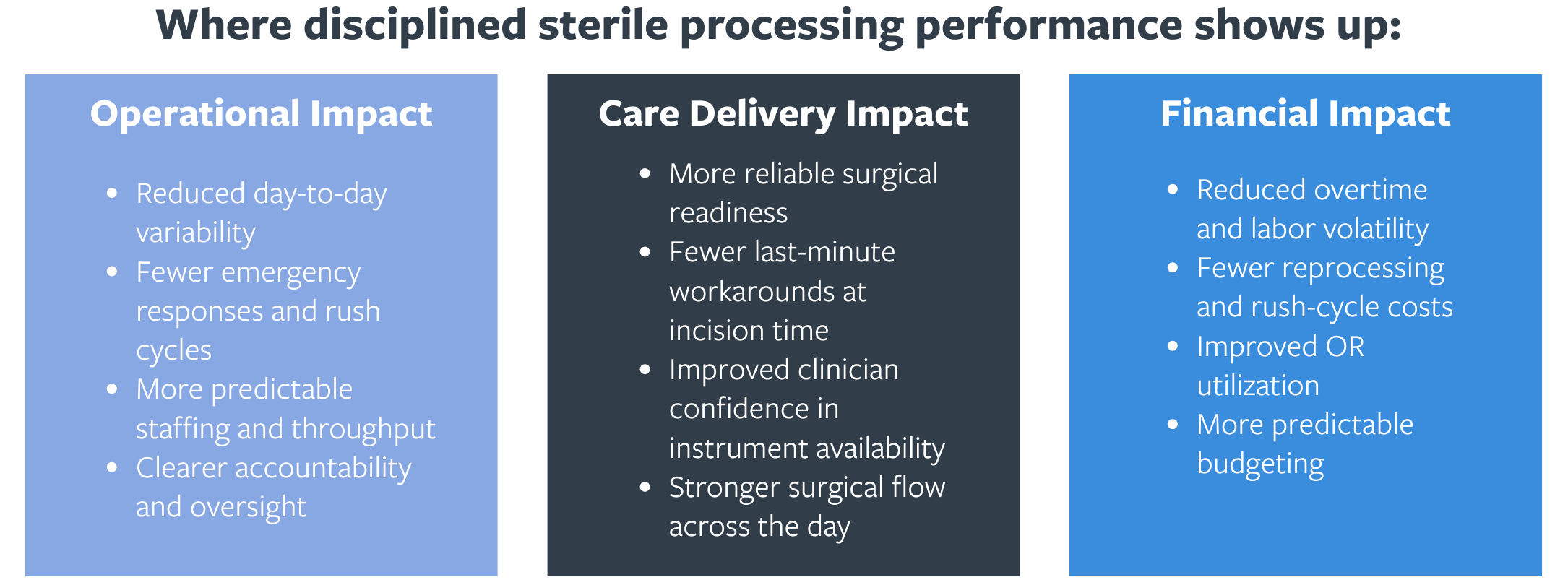
Executive takeaway
Sterile processing costs rarely appear as a single line item. They surface instead as variability—overtime, rework, delays, and premature instrument replacement—that disrupts surgical flow and erodes predictability.
Organizations that govern sterile processing with disciplined operations, clear accountability, and consistent performance visibility reduce this variability. The result is greater operational stability, protected patient safety, and sustained financial predictability.
For leaders, the opportunity is not cost-cutting—it is governing sterile processing with the rigor applied to every other critical clinical operation.
If these myths reflect challenges you’re seeing across sterile processing or perioperative operations, connect with our team to discuss how disciplined governance and performance visibility can reduce variability.
Related Posts






Let’s Talk About the Right Solution for Your Organization
Get in touch to discuss how Crothall Healthcare’s services and solutions can help your healthcare organization exceed its goals. You’ll learn more about:
- The transparency we bring to outsourced support services
- How we design customized solutions for your unique needs
- The technology and innovation Crothall delivers across all our services