
ACCOUNT SPOTLIGHT: Mt. Sinai Queens
Transforming Patient Transport at Scale
How Mount Sinai Queens (MSQ) transformed a department-driven transport model into a centralized patient transportation program supporting 130K+ annual transports.

The Operating Environment
Patient transportation was managed independently across multiple clinical departments, with each area maintaining its own transport resources and workflows. The model reflected years of departmental evolution, with individual clinical areas developing their own processes. While it served departments well, consistency and visibility across the hospital became increasingly difficult as patient volume and operational complexity grew.
Transport requests were not consistently managed through Epic, limiting operational visibility and creating inconsistent communication workflows. As a result, transporters and nursing teams did not always have shared visibility into patient handoffs, transporter arrival times, or escalation pathways.
As throughput pressures and patient volumes increased across the hospital, patient transportation became increasingly tied to broader coordination between nursing, patient flow, discharge activity, and room turnover. To better support those demands, Mount Sinai Queens transitioned to a more centralized and measurable patient transportation model.
-
17
49% Reduction in Patient Turnaround Time
The Strategic Shift
MSQ had already established a broader Compass Healthcare partnership before expanding the relationship to include patient transportation. The health system partnered with Crothall to centralize patient transportation through standardized workflows, dedicated leadership, and technology-enabled coordination designed to improve consistency across shifts and departments. A dedicated leadership structure, including the addition of a manager, provided the operational oversight needed to support continued growth as services expanded throughout the hospital.
Crothall’s 24/7 National Performance Center centralized patient transport requests. While an Epic-enabled request management system electronically routed, prioritized, and assigned requests directly to mobile devices, replacing manual communication processes that had previously varied across departments. Real-time nursing alerts provided visibility into transporter arrival times, strengthening coordination between teams.
Workflows were redesigned to enhance responsiveness and reliability while improving trips per productive hour (TPPH). Structured onboarding and continuous cross-training were implemented to build a more versatile workforce capable of supporting expanded responsibilities.
Recurring nursing collaboration and labor-management meetings brought together nursing leadership, transport team members, managers, and union representatives. The meetings were designed to align operational expectations, improve patient handoffs, establish clearer escalation pathways, and reinforce accountability.
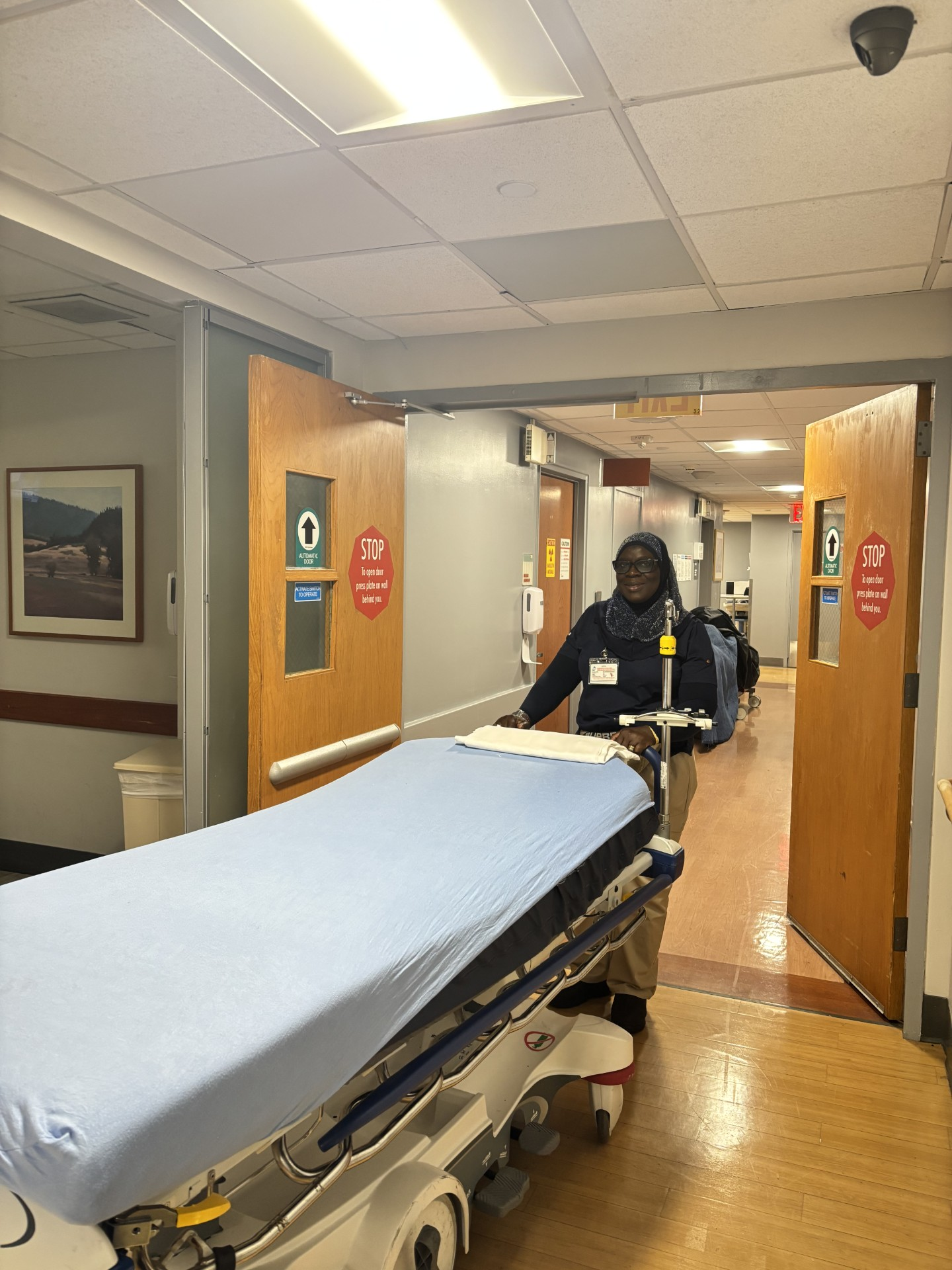
The development of our dedicated transport department transformed patient flow and staff collaboration. By shifting patient transport from clinicians to a specialized team, we improved efficiency, enhanced teamwork, and enabled our clinical staff to focus on what they do best, caring for patients.
Ellina Babar Assistant Vice President, Hospital Operations
The Impact
What began as a department-driven transportation model evolved into a more integrated patient movement strategy that strengthened coordination across clinical and support teams throughout the hospital.
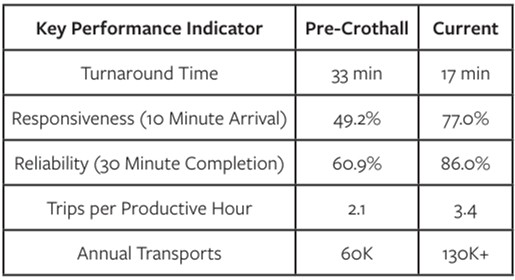
Although staffing increased to support transport volumes, the performance gains reflected improvements to the operating model rather than additional staffing alone.
As confidence in the transportation model grew, Mount Sinai Queens expanded the program to include Emergency Department and Radiology transportation services. Annual transport volume increased from 60,000 to more than 130,000 patient transports while turnaround times, response times, and workforce productivity continued to improve.
Beyond improving transportation performance, the program strengthened coordination between clinical and support teams while creating a more connected patient flow experience. Consistent communication between nursing and transportation also improved patient discharge coordination and supported more efficient environmental services workflows.
Executive Takeaway
This spotlight demonstrates how patient transportation can evolve from a departmental support function into a strategic patient flow capability that strengthens coordination, improves operational performance, and scales to meet growing demand across the hospital.
By centralizing workflows, standardizing operations, and improving real-time coordination between clinical and support teams, Mount Sinai Queens more than doubled annual transport volume while continuing to improve turnaround times, response times, and workforce productivity.
For health systems facing increasing patient volumes and throughput demands, patient transportation represents more than a support service. With standardized workflows, dedicated leadership, and real-time operational visibility, it becomes a strategic operational capability that strengthens coordination across the hospital.
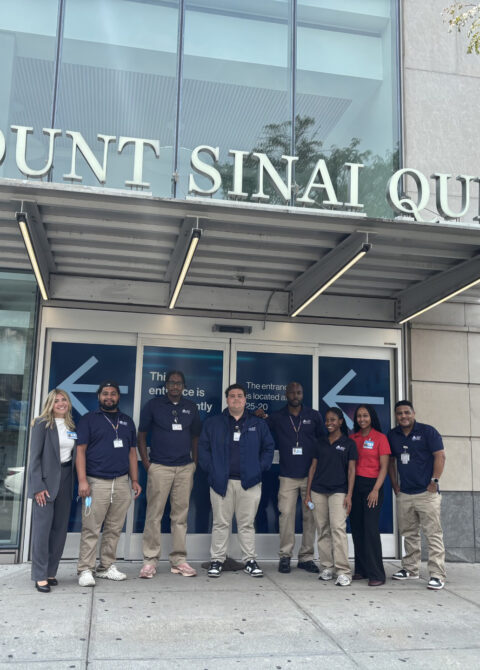
Leadership Team: Gigi Carlucci, Director; Maki Solomon, Manager; Christopher Palamara, Resident Regional Director